
When to Use a Cast Iron Skillet (and When to Skip It) + Our Favorite Frittata Recipe

Updated: May 5

I reach for my cast iron skillet frequently, for frittatas, roasted potatoes, grilled cheese sandwiches, and so much more. But there are also times when it stays in the cabinet. Over the years, I’ve learned when cast iron shines, and when another pan is the better choice.
Let's break down how we use cast iron in our kitchen, when we opt for stainless or enameled alternatives, and one of our favorite cast iron recipes: a sweet potato + kale frittata you can make your own.
If you’ve ever wondered when to use a cast iron skillet and when it’s better to reach for something else, this post will help break it down in a simple, approachable way. I’ll walk you through the strengths of cast iron, when I personally reach for it, and where I lean toward stainless steel or enameled cookware instead.
Why Cast Iron Works
Cast iron is beloved for one big reason: it holds heat like a champ. Once it gets hot, it stays hot, which makes it perfect for things that need a good sear, crispy edges, or even, consistent baking.
It’s naturally nonstick when seasoned well, gets better with age, and moves easily from stovetop to oven. But it’s not the best for everything. It’s heavy, slow to heat up and cool down, and not ideal for delicate ingredients or acidic sauces.
Cast Iron vs Other Cookware
We mostly cook with cast iron and stainless steel in our kitchen, with a few vintage enameled Dansk pieces we love for cozy stews and braises. Here's how we think about the differences:
Cast Iron: Best for high heat, oven bakes, crisping, and browning. Avoid for delicate or acidic foods.
Stainless Steel: Great for quick sautés, pan sauces, and anything that needs precise heat control.
Enameled Cast Iron (like Dutch ovens): Ideal for soups, stews, and acidic braises (like tomato-based dishes).
When to Use a Cast Iron Skillet (and When It’s Better to Skip It)
When to Use a Cast Iron Skillet
Steaks, pork chops, or chicken thighs
Bacon, sausage, smash burgers
Frittatas and egg bakes
Cornbread, cobblers, biscuits
Chicken pot pie, shepherd’s pie, or other skillet bakes
Roasted sweet potatoes, Brussels sprouts, or squash
Hash, skillet stuffing, or fried rice
Grilled cheese sandwiches
Pancakes or French toast
Reheating leftovers with a crispy edge
When to Skip the Cast Iron
Flaky fish or shrimp — too delicate and prone to sticking
Tomato sauces or vinegar glazes — acid can wear down your seasoning
Scrambled or fried eggs — unless your pan is super well-seasoned
Quick sautés like spinach or zucchini ribbons — better in stainless
Delicate melting tasks — chocolate, custards, or caramels need gentler heat
Want to keep your skillet in top shape? Check out our step-by-step guide on how to clean, season, and restore your cast iron skillet.
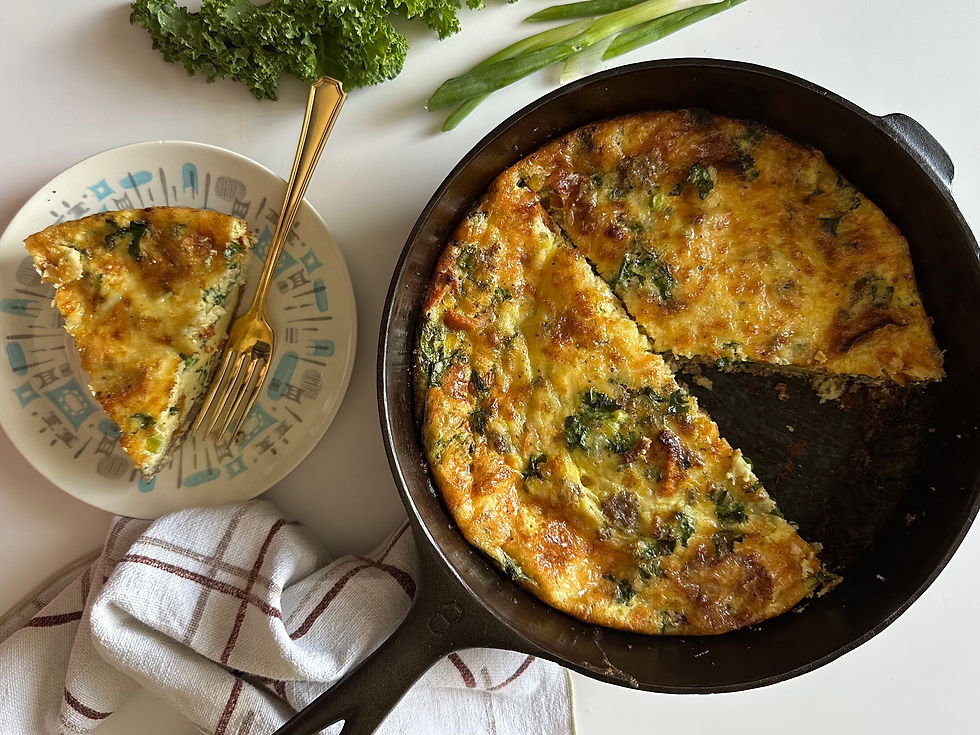
Our Go-To Frittata Recipe
This hearty, flexible frittata is one of our favorite ways to use cast iron. The edges get golden, the center stays fluffy, and you can easily swap in whatever fillings you have on hand.
Ingredients:
12 eggs
1 cup heavy cream
1 large sweet potato, sliced into ¼-inch rounds and roasted
8 oz bacon breakfast sausage, cooked and crumbled
A few small handfuls of baby spinach or kale (if using kale be sure to finely chop)
2–3 green onions, chopped
1 cup shredded Gruyere, Swiss or Cheddar cheese
1 tsp kosher salt (plus more to taste)
Black pepper
Olive oil or butter for greasing the pan
Instructions:
Preheat oven to 375°F.
Whisk together eggs, cream, salt, and black pepper in a large bowl. Set aside.
Heat your cast iron skillet over medium heat.
Cook your bacon or sausage directly in the skillet until browned and crumbled. This not only cooks the meat but also helps grease the pan. If using bacon, remove to a paper towel lined plate to cool. Remove any extra grease from the pan.
Evenly spread your ingredients into the pan: roasted sweet potatoes, green, meat, and green onions.
Sprinkle cheese evenly over the top.
Pour the egg mixture over everything as the final step.
Let it sit on the stovetop on low for 5–7 minutes.
Transfer the skillet to the oven and bake for 18–22 minutes, or until the center is just set and the top is puffed and golden.
Optional: For a golden top, place under the broiler for 2–3 minutes at the very end. Watch closely!
Let rest for 5–10 minutes before slicing and serving.
Notes from the Kitchen:
Choose your Dairy
You can use greek yogurt, sour cream, whole milk or half and half. we find the heavy cream gives the best texture.
Precook your fillings
Things like sausage, potatoes, mushrooms, or bacon should be cooked beforehand.
Greens and herbs can go in raw
Spinach, arugula, or green onions will wilt beautifully in the oven. Spinach is out top choice!
Explore different cheeses
Cheddar, feta, goat cheese, or mozzarella all work.
Vegetarian Eater?
No problem. Omit the meat and add more veggies.
Get Creative or Clean out the Fridge
This is a fantastic clean-out-the-fridge meal, using up any extra proteins of vegetables you may have on hand.

About Kevin & Kate
We're Kevin and Kate — a husband-and-wife duo who turned a weekly cooking ritual into something we wanted to share.
Date Nite is our subscription experience for couples: a complete evening every week with dinner, a cocktail pairing, grocery list, playlist, and all the small details that make a night at home feel like something you actually looked forward to. We're glad you found us.
Comments